
Last updated
How many restrooms does a farm operation need?
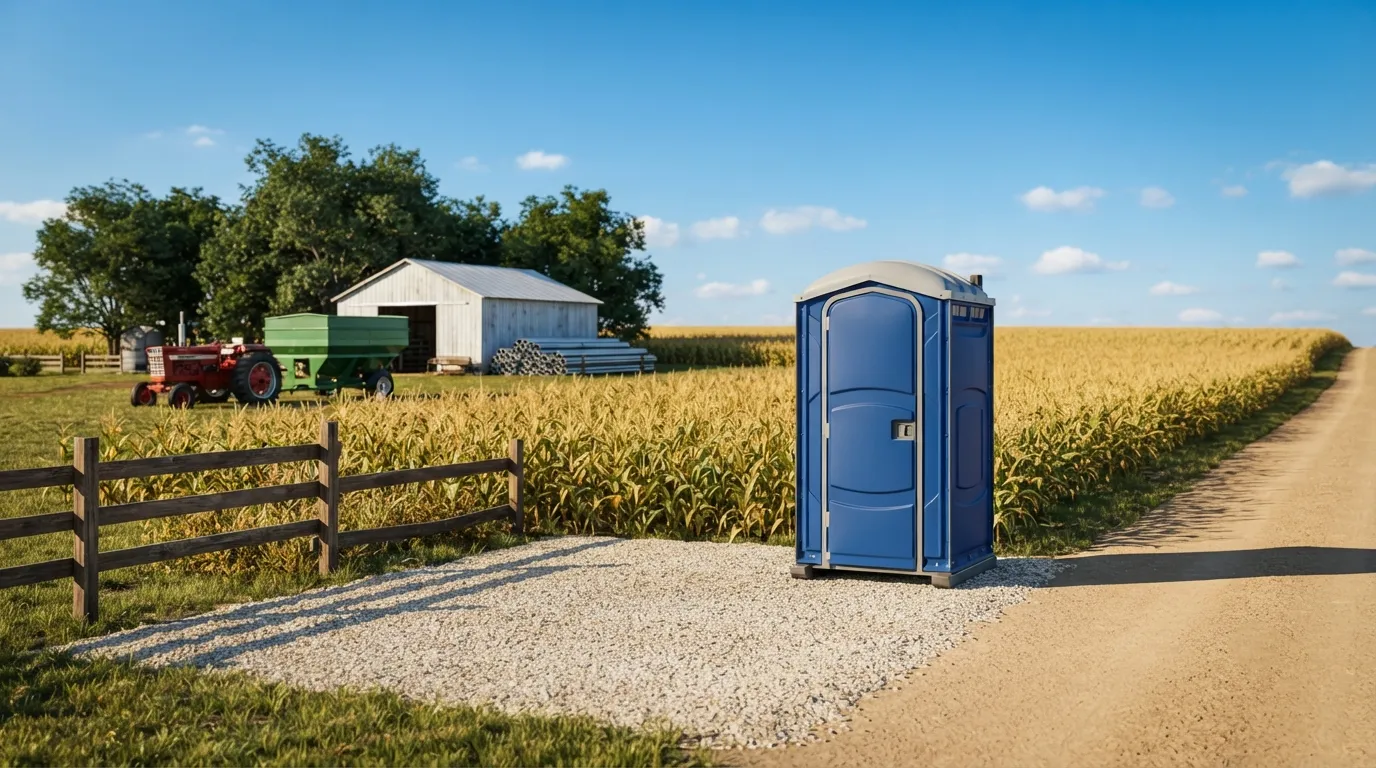
Start with headcount, not acreage. OSHA 1928.110 sets field sanitation at one toilet and one water source per 20 hand-labor employees, and that facility has to sit within a quarter mile walk of wherever people are working. A small crew of eight or ten workers gets by with one standard porta potty rental moved as the work area shifts. Larger operations, especially during harvest when crews spread out across several fields, need units staged at multiple points so nobody is walking half a mile to relieve themselves. Alexandria Porta Pros maps out placement with the farm manager before delivery, factoring in tractor paths, irrigation lines and where crews actually cluster during the day. If the crew works near packing sheds or processing areas, a handwashing station rental belongs next to the toilets, not just at the barn. Potable water is not optional either: OSHA 1926.51(a)(1) requires an adequate supply wherever people work, and that applies to field labor the same as a construction site. For farms running a mixed crew, a portable toilet rental sized to headcount plus a couple of extra units for turnover days keeps the operation compliant without over-renting. Ag operations near Alexandria that also process on-site should check grease trap pumping needs if there is a wash station or kitchen involved.
Where should units go on a working farm?
Placement matters more on a farm than almost anywhere else, because ground conditions shift with the season. A unit needs firm, level ground, and standing water or soft mud after rain will tip a standard unit fast. Alexandria Porta Pros checks access routes before scheduling delivery, since a service truck needs a clear path in and out, especially during wet months when farm roads get soft. Keep units away from wellheads and irrigation intakes; a good rule is to treat the toilet placement the same way you'd treat any potential runoff source, well clear of water systems. Our porta potty placement guide covers ground stability and clearance in more depth. For operations that rotate fields through a season, we can reposition units as the crew moves, which is common on larger tracts outside the city core. If the farm sits closer to residential edges of Alexandria, screening the unit from view with simple placement choices keeps neighbors happy without extra cost. Farms running events, like a fall festival or pick-your-own weekend, need a different setup than daily field work does. That kind of short-term crowd calls for county fair restrooms style planning, with more units concentrated near parking and the main draw, rather than spread thin across acreage.
What about handwashing and pesticide compliance?
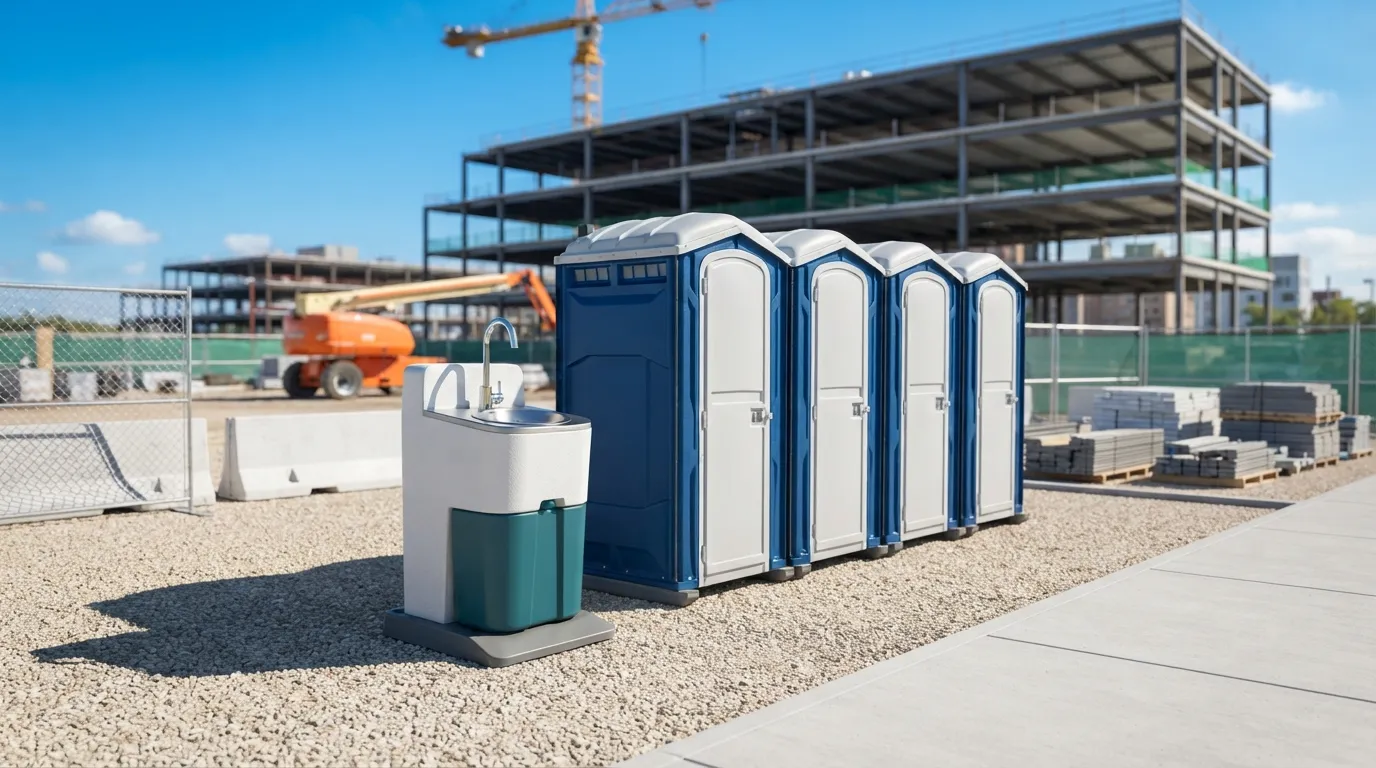
This is where a lot of farms miss a requirement. If workers are applying pesticides or herbicides, OSHA 1926.51(f)(1) requires washing facilities for that specific task, separate from general sanitation. That means a portable sink rental or dedicated hand sanitizer station rental near the mixing and application area, not just at the main restroom cluster. General handwashing, meanwhile, falls under 29 CFR 1910.141(d)(2), which requires soap and towels or a hand-drying device. Hand sanitizer alone does not satisfy that standard, so a sanitizer-only station covers convenience but not the compliance requirement. Standard units run in the 100 to 350 dollar range for a single day, with monthly farm contracts typically landing between 125 and 325 dollars depending on service frequency and unit count, per our pricing data. Seasonal farms that need units for a defined harvest window often do better with a week-long booking rather than daily renewal; see porta potty rental per day and monthly porta potty rental for how the math shifts with duration. Service interval matters too: ANSI/PSAI Z4.3 sets a baseline of one service visit per week for up to 10 users over a 40 hour week, though heavier crews need more frequent pumping to avoid a unit filling mid-shift.
| unit | duration | typical price |
|---|---|---|
| standard | day | $150 |
| standard | week | $200 |
| standard | month | $200 |
Farms weighing a longer commitment can compare against construction site services pricing, since seasonal ag work and job site rentals often land in the same range. For general cost background, porta potty rental cost breaks down what drives the price up or down.
Do farms need ADA-accessible units?
Not always, but it depends on who's on site. If the farm hosts public events, like agritourism or a farm stand, ADA Standards 213.2 requires at least one accessible unit in any cluster, even a small one. Pure field labor crews without public access usually don't trigger that requirement. Check our ADA accessible porta potty page for specs.
How often do farm restrooms get serviced?
Weekly service is standard for smaller crews, per ANSI/PSAI Z4.3. Larger seasonal operations near Alexandria, especially during harvest, often move to twice-weekly pumping. See how often are porta potties cleaned for the full breakdown by crew size.
Can we get emergency service if a unit fills early?
Yes. Alexandria Porta Pros runs emergency porta potty rental for farms that hit capacity faster than expected during heavy labor weeks. Same-day service is typical when the call comes in before early afternoon.
What size crew needs more than one unit?
Past 20 workers, OSHA 1926.51(c) and the field sanitation standard both point toward adding units rather than stretching one. Use how many porta potties do I need to run the numbers for your specific crew size.
Do we need a permit for farm restrooms in Alexandria?
Placement on private agricultural land typically doesn't need the same permit as a public right-of-way setup, but this needs confirming with the city. See porta potty permit requirements before delivery day.
Next step
Get a delivery date
Tell us the address, the dates and the headcount. We size the order and confirm the route.